Blog
What Happens If a Cavity Is Left Untreated in North Ridgeville, OH?
Where Smiles Begin!
Comprehensive dental care for the whole family

If a cavity is left untreated, tooth decay can continue spreading through the layers of the tooth. What may begin as a small area of enamel damage can eventually lead to tooth sensitivity, pain, infection, abscess formation, and possible tooth loss. In many cases, early cavity treatment can help preserve more of the natural tooth and reduce the need for more involved dental care.
At Center Ridge Dental in North Ridgeville, OH, we help children, adults, and families understand their oral health and receive timely care when tooth decay, tooth pain, or dental concerns develop. Dr. Nathan Harris, Dr. Kayla Bomske, and our team take a compassionate, patient-focused approach to dentistry, helping each patient feel informed, comfortable, and confident about their treatment options.
This Article will address
- What happens if a cavity is left untreated
- How cavities progress over time
- Why small cavities can become bigger dental problems
- When cavity pain typically begins
- What symptoms may point to tooth decay
- Whether a cavity can heal on its own
- How cavities are treated
- How early treatment can help save teeth
- When to schedule a dental visit in North Ridgeville, OH
What Is a Cavity?
A cavity is an area of tooth decay that forms when bacteria, plaque, and acids weaken the tooth enamel. Enamel is the hard outer layer of the tooth, but it can break down over time when acids sit on the tooth surface. These acids are often created when bacteria in the mouth interact with sugars and starches from food and drinks.
Cavities can affect patients of all ages. Children may develop cavities as their brushing habits are still improving. Adults may develop cavities from diet, dry mouth, aging dental work, gum recession, or inconsistent dental visits. Older patients may also be more prone to decay around existing fillings, crowns, or exposed root surfaces.
Because tooth decay can begin quietly, routine dental exams and cleanings are important. During a dental exam at Center Ridge Dental, our team can check for early signs of cavities before they become painful or more difficult to treat.
How Do Cavities Progress Over Time?
Cavities usually progress in stages. The earlier tooth decay is found, the more conservative treatment may be.
Common stages of cavity progression include:
- Early enamel weakening: The outer layer of the tooth begins to lose minerals. At this stage, there may be no pain or visible hole.
- Enamel cavity formation: A small damaged area or opening may form in the enamel.
- Dentin involvement: Decay reaches the softer layer beneath the enamel. This can cause sensitivity to hot, cold, sweet foods, or pressure.
- Pulp irritation or infection: Decay moves closer to the inner nerve and blood supply of the tooth. Pain may become more noticeable or persistent.
- Abscess or advanced infection: Bacteria can spread into the root area or surrounding tissue, leading to swelling, pus, or severe pain.
- Tooth loss risk: If too much tooth structure is damaged, the tooth may not be restorable and extraction may be needed.
This progression does not happen at the same speed for every patient. Diet, oral hygiene, dry mouth, tooth location, existing dental work, and overall oral health can all affect how quickly a cavity worsens.
Why Do Small Cavities Become Big Problems?
Small cavities become big problems because decay does not usually stay limited to one tiny spot. Once bacteria break through the enamel, they can reach the softer inner layers of the tooth. These layers are less protective than enamel, which means decay may spread more quickly once it gets inside the tooth.
One of the reasons cavities are easy to ignore is that they may not hurt at first. A patient may feel fine while decay is still active. By the time pain begins, the cavity may already be larger or closer to the nerve.
Waiting to treat a cavity can lead to:
- Larger fillings
- Dental crowns
- Root canal therapy
- Dental emergencies
- Infection or abscess
- Tooth extraction
- Tooth replacement with a bridge or dental implant
Early treatment is usually simpler, more comfortable, and more focused on preserving the natural tooth. At Center Ridge Dental, we believe in helping patients understand their options clearly so they can make informed decisions about their care.
What Are the Early Signs of a Cavity?
A cavity may not always cause obvious symptoms at first. However, there are signs that may suggest tooth decay is developing.
Early signs of a cavity may include:
- Tooth sensitivity to hot, cold, or sweet foods
- Mild toothache
- Pain when biting or chewing
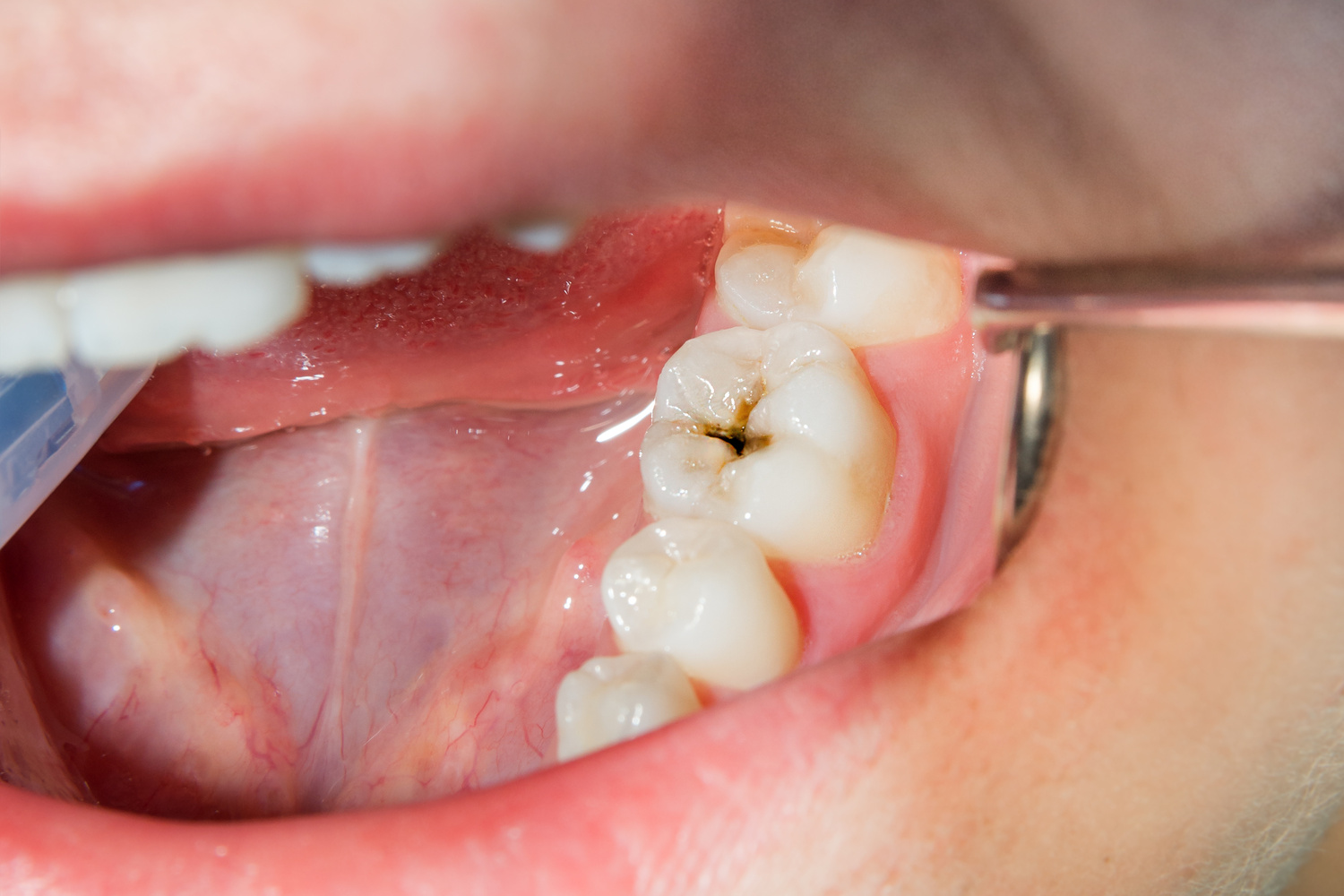
- A visible dark spot or white spot on the tooth
- A small hole, pit, or rough area
- Food getting caught in the same area
- Bad breath or an unpleasant taste
- Gum tenderness near one tooth
- A filling or crown that feels different than it used to
A cavity can be present even without severe pain. This is why routine dental exams are so important. When our team identifies decay early, we can recommend treatment before the tooth becomes painful or infected.
When Does Cavity Pain Typically Begin?
Cavity pain typically begins once decay moves beyond the enamel and reaches the dentin or pulp. Dentin is the softer layer beneath the enamel, and it contains tiny pathways that can make the tooth more sensitive. When decay reaches this layer, patients may notice discomfort with cold drinks, sweets, brushing, or chewing.
More intense or throbbing pain may develop if decay reaches the pulp, which contains the tooth’s nerve and blood supply. At that point, the tooth may require more advanced treatment.
Pain may be a sign that a cavity has become more serious, especially if it is accompanied by:
- Swelling
- Fever
- Pain that wakes you up at night
- Pain that spreads to the jaw, ear, or head
- A bump on the gums
- A bad taste or drainage near the tooth
If you are experiencing tooth pain in North Ridgeville, OH, it is best to contact a dentist promptly. Center Ridge Dental offers emergency dental care and encourages patients to reach out as soon as possible when urgent symptoms appear.
Can an Untreated Cavity Lead to an Abscess or Dental Emergency?
Yes, an untreated cavity can lead to an abscess or dental emergency. When bacteria reach the inner tooth and surrounding tissues, infection can develop. A dental abscess is a pocket of infection that may cause significant pain, swelling, and pressure.
Symptoms that may suggest a cavity has become urgent include:
- Severe or persistent toothache
- Swelling in the gums, jaw, or face
- Pus near the tooth or gums
- Fever
- Pain that spreads to the ear, jaw, or head
- Difficulty biting or chewing
- Trouble opening the mouth
- A tooth that feels loose or raised
Dental infections should not be ignored. If you notice swelling, severe pain, or signs of infection, contact Center Ridge Dental as soon as possible. Our team can help determine the next step and work to address the source of the problem.
Can a Cavity Heal on Its Own?
A true cavity cannot heal on its own once a hole has formed in the tooth. Very early enamel weakening may sometimes be managed with fluoride, improved home care, dietary changes, and professional guidance. This stage is often referred to as early demineralization.
However, once the enamel has broken down and a cavity has formed, the damaged tooth structure cannot grow back on its own. Professional dental treatment is needed to remove the decay and restore the tooth.
This is why timing matters. If tooth decay is found early, treatment may be more conservative. If decay is left untreated, the tooth may need a larger restoration or more complex care.
How Are Cavities Treated?
Common cavity treatment options include:
- Fluoride or enamel-supporting treatment: This may be recommended for very early enamel weakening before a true cavity forms.
- Tooth fillings: A filling is often used for small to moderate cavities. The decayed portion is removed, and the tooth is restored.
- Dental crowns: A crown may be recommended if the cavity is large or the tooth has lost significant structure.
- Root canal therapy: If decay reaches the inner tooth, root canal treatment may be needed to remove infection and help save the tooth.
- Tooth extraction: If a tooth is too damaged to restore, removal may be necessary.
- Dental bridges or dental implants: If a tooth is lost, replacement options can help restore chewing function and appearance.
At Center Ridge Dental, we provide preventive, general, restorative, cosmetic, emergency, and family dentistry services in North Ridgeville, OH. Our goal is to help patients receive the right level of care at the right time.
How Does Early Cavity Treatment Help Save Teeth?
Early cavity treatment helps save teeth by removing decay before it reaches the nerve or damages too much of the tooth structure. The more natural tooth structure that remains, the more conservative the treatment may be.
For example, a small cavity may only need a tooth filling. A larger cavity may require a crown. If decay reaches the nerve, the tooth may need root canal therapy. If the damage becomes too severe, extraction may be the only option.
Early treatment can help:
- Preserve more natural tooth structure
- Reduce the risk of infection
- Prevent pain from worsening
- Lower the chance of needing emergency dental care
- Avoid more complex restorative treatment
- Support long-term oral health
Routine dental exams are one of the best ways to find cavities before pain begins. Dr. Nathan Harris, Dr. Kayla Bomske, and our team take time to explain concerns clearly and create personalized treatment plans based on each patient’s oral health, comfort, and goals.
How Can You Prevent Cavities From Getting Worse?
If you think you may have a cavity, the best step is to schedule a dental exam. Home care can support your oral health, but it cannot repair a formed cavity without professional treatment.
To help prevent cavities from getting worse, patients can:
- Schedule routine dental exams
- Keep up with professional dental cleanings
- Brush twice daily with fluoride toothpaste
- Floss daily
- Limit frequent sugary snacks and drinks
- Drink water throughout the day
- Avoid sipping sugary or acidic drinks for long periods
- Ask about dry mouth if your mouth often feels sticky or dry
- Wear a night guard if grinding or clenching is damaging your teeth
- Call the dentist if sensitivity, pain, or visible changes develop
Preventive dentistry is an important part of the patient experience at Center Ridge Dental. By monitoring your oral health regularly, our team can help identify concerns early and support a healthier smile over time.
Schedule Cavity Treatment at Center Ridge Dental in North Ridgeville, OH
If you think you may have a cavity, delaying care can allow tooth decay to become more painful and more difficult to treat. Center Ridge Dental provides dental exams, tooth fillings, restorative dentistry, and emergency dental care for children, adults, and families in North Ridgeville, OH.
Our team is committed to compassionate, honest, and patient-focused dentistry. If you are experiencing tooth sensitivity, tooth pain, visible decay, or signs of a dental emergency, contact Center Ridge Dental today to schedule an appointment by phone or through the online form.

Dr. Nate Harris
Dr. Harris is dedicated to providing personalized, patient-centered dental care built on trust, comfort, and the latest in dental technology. He takes the time to listen to your concerns, explain your options clearly, and create treatment plans that align with your goals for a healthy, confident smile. As a graduate of The Ohio State University College of Dentistry and an active member of the American Dental Association, Ohio Dental Association, Greater Cleveland Dental Society, and West Shore Study Club, Dr. Harris continuously advances his knowledge to ensure you receive the best care possible. His priority is helping every patient feel informed, supported, and at ease throughout their dental experience.